The Webinar Era
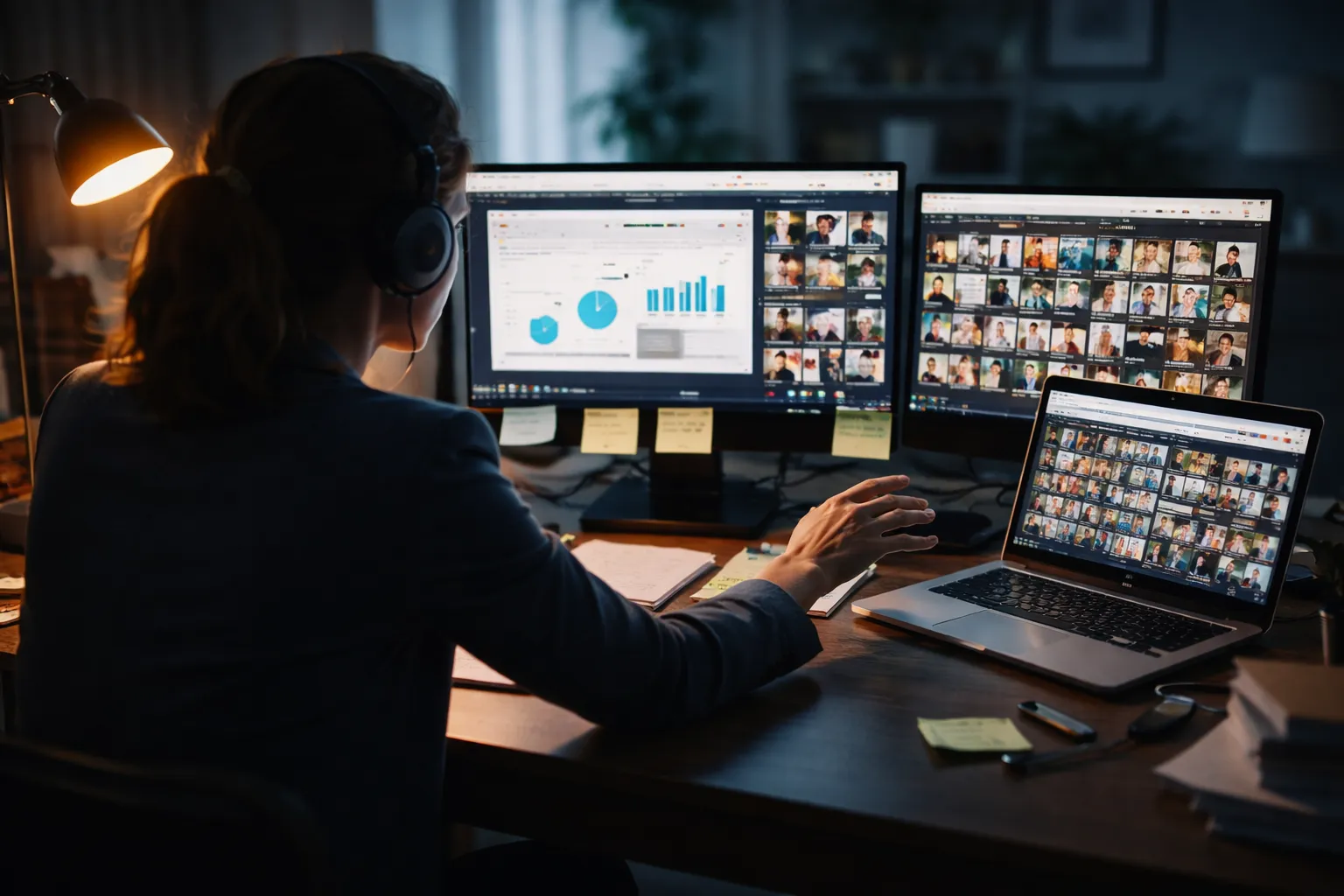
The last three months I have counted that I have participated in almost 45 webinars – organized by third parties – and I have received an invitation for at least another 50!
I imagine that other people, such as business leaders, whose jobs and positions are related to professions and areas which are far more active online, have been going crazy in choosing the right webinar for them and in virtually presenting themselves in webinars organized by parties and affiliated partners.
Although webinars seem to be very convenient, because presumably, you can attend them while being at your office and by saving commuting time, unfortunately, reality proves that being at the office or even at the home office is the major flaw of the process. I assume that practically most people have attempted to do what I did – that is connect to the webinar via one device and work in another! I occasionally found myself discussing a topic at a breakout room, for which I had no idea what it was all about! Our brain certainly cannot process so much “noise” in the process and neuroscience claims that multitasking - especially with the use of multiple devices – is the worst strategy employed in learning new things.
So, I ended up creating a list of criteria that would work for me – and which I am sharing with you if this is of any help – in order to identify and choose the right webinar:
-
The right topic: make sure the topic is 100% relevant to what you are doing at the moment. Webinars have sexy titles and topics in order to attract interest and many people fall into the trap of choosing a nice topic which is not related to what is really of interest to them, but it’s a rather “nice to have” talk.
-
The right speaker: research for the background of the speaker and make sure that the point of view or content discussed relates to your interests and challenges at the moment. I recently attended a Leadership Coaching (meant to be) two-day seminar, only to find out that the speakers where analyzing P&Ls.
-
The right time: if the time is not convenient, then do register to attend, and since the content will be available later on – 99% of the times true – make sure that you can listen to a talk of interest when you are relaxed and less distracted; most probably during the end of the day or even during a weekend.
-
The right organizers: most webinars are organized by different organizations and institutions as well as from different regions. If this is a presentation organized by an educational institution or a partner of a specific region, then it could be that this is not the most appropriate angle to review at the moment.
-
The appropriate mode of learning: there are people that just prefer to casually listen to a talk while others would prefer a more experiential mode of learning. Although, it is harder to keep an audience engaged in a webinar, there are digital tools and platforms that will let people interact successfully. Of course, successful engagement with high impact, requires a small number of participants rather than a big audience.
-
A webinar that provides a networking opportunity: because it will attract people that you would like to meet starting with the speaker. Whenever I attend a webinar I always find the opportunity to connect with the speaker and send an invitation via LinkedIn, introducing myself by saying that I am currently attending your speech on this topic and I find this point of view interesting. If you participate in a breakout room, where you are randomly split with other people, find the opportunity to have a short introduction and exchange LinkedIn profiles via chat so that you can connect with other people. If you are a “networking animal” you can even send your email in the chat of the main room encouraging other people to do the same, in case the attendees, the speaker or the organizers would like to get in touch with you, for future similar events.
I am sure that in the near future, we will start enjoying more face to face events, but blended learning and the use of technology are here to stay, and we will need to adjust to new modes of learning. I am an advocate though of the fact that technology is only a tool and that the real impact can be achieved through our relationships with other people. So, as a final note be always open to meet new people and ideas!